How to Succeed in the Dyestuff Industry in 2026?
The Dyestuff Industry is evolving rapidly. Experts predict significant changes by 2026. Dr. Emily Chen, a leading figure in the sector, asserts, “Innovation is key to thrive in the dyestuff business.” Her insights highlight the need for adaptability and creativity.
Sustainability is a pressing challenge. Companies must shift toward eco-friendly practices. For instance, utilizing natural dyes can reduce environmental impact. Yet, achieving this transition is fraught with difficulties. There is a delicate balance between cost and eco-innovation.
Market demands are also shifting. Today's consumers favor brands that prioritize sustainability. This trend creates opportunities but demands strategic thinking. Businesses in the Dyestuff Industry must embrace change, or risk obsolescence. Preparing for 2026 requires foresight and a willingness to reflect on past failures.
Identifying Key Trends in the Dyestuff Industry for 2026
In 2026, the dyestuff industry is poised for significant growth. Market research predicts a compound annual growth rate (CAGR) of 5.8% from 2021 to 2026. This growth is driven by demand in various sectors, particularly in textiles and agrochemicals. According to a recent report, the textile segment will account for nearly 50% of the market share. Companies must adapt to these changing demands.
Sustainability will continue to be a focal point. Biodegradable dyes are on the rise, responding to consumer preferences for environmentally friendly products. A survey found that 70% of consumers are willing to pay more for sustainable options. However, many manufacturers face challenges in sourcing these materials and scaling production. This poses a significant hurdle for those unprepared.
Innovation in dye technology is crucial. The shift towards digital dyeing processes offers speed and efficiency. Yet, the initial investment can be daunting. Many firms may struggle to balance cost and innovation. It’s vital to keep an eye on advancements while being ready to pivot. The future will belong to those who can embrace change and sustainability effectively.
Analyzing Market Demands and Consumer Preferences in Dyestuff
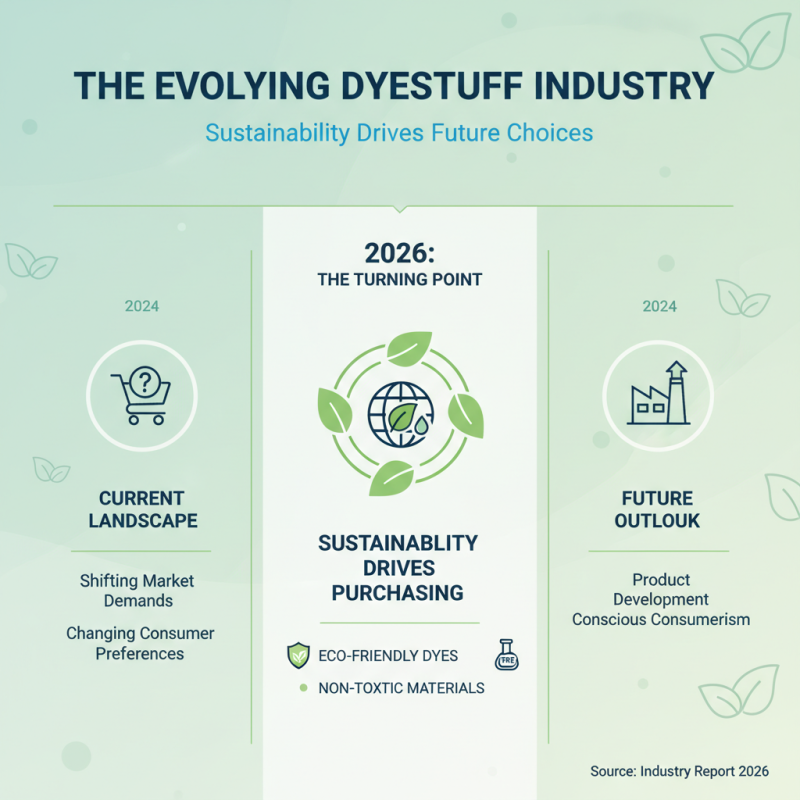
The dyestuff industry is evolving, with significant changes in market demands and consumer preferences. In 2026, sustainability will drive most purchasing decisions. Consumers are becoming more aware of their choices, favoring eco-friendly and non-toxic dyes. This trend is reshaping the landscape of product development.
Brands must adapt rapidly to keep up. Here are some tips: First, invest in research to develop sustainable dye solutions. This could mean using natural ingredients or processes that reduce waste. Secondly, engage with consumers directly. Gather feedback on preferences through surveys or social media. Proactive communication can create loyalty and trust.
Incorporating unique colors and innovative applications can also attract attention. Experimentation with materials is essential. However, it’s vital to assess the feasibility and market readiness of new ideas. Reflecting on past product launches can reveal insights into what works and what doesn’t. Consider consumer trend shifts; aim for flexibility. This responsiveness can set a brand apart.
Innovative Technologies Impacting Dyestuff Production and Distribution
The dyestuff industry is undergoing transformative changes due to innovative technologies. Automating production has shown great promise. However, not all machines are efficient. Some factories face unexpected breakdowns. This can lead to delays and increased costs. The challenge lies in selecting the right technology and ensuring it integrates well with existing systems.
Digital platforms are reshaping distribution methods. These platforms increase visibility and streamline orders. Still, many companies struggle with adapting. The learning curve can be steep for traditional operators. Training and support are often lacking. Proper implementation remains a critical concern for many organizations.
Sustainability is another pressing issue. Eco-friendly practices are becoming essential for success. Yet, not every new method is effective or true to its claims. Companies must be cautious about greenwashing. For many, the journey to adapt these innovations is filled with hurdles. Balancing technology and sustainability will define the industry's future.
Dyestuff Industry Innovations: Projected Impact in 2026
Sustainable Practices and Regulations in the Dyestuff Sector
The dyestuff industry is transitioning towards sustainable practices. In 2026, regulations will likely become stricter. According to a recent industry report, over 70% of consumers favor brands with environmentally friendly products. Companies must adopt green chemistry principles to meet these expectations.
Sustainable practices can include using renewable resources for dye production. Reports indicate that bio-based dyes may dominate the market, capturing around 30% of overall revenues. Implementing water-efficient processes is also critical. Nearly 80% of the industry's water is used in dyeing processes, highlighting the need for reduction.
However, many companies struggle with these changes. Transitioning away from synthetic dyes is challenging. Some businesses lack the required technology or knowledge. There's also a fear of increased costs. Success lies in collaboration and innovation. Partnerships with research institutions can facilitate this shift towards sustainability.
How to Succeed in the Dyestuff Industry in 2026? - Sustainable Practices and Regulations in the Dyestuff Sector
| Sustainable Practice |
Description |
Regulation Compliance |
Impact on Industry |
| Water Conservation Techniques |
Implementing closed-loop systems to recycle water. |
Meets local and global water usage regulations. |
Reduces operational costs and enhances brand reputation. |
| Eco-friendly Dyes |
Utilizing dyes from natural sources with low environmental impact. |
Complies with REACH and other safety regulations. |
Attracts eco-conscious consumers and reduces chemical footprint. |
| Waste Minimization |
Implementing lean processes to reduce waste generation. |
Adheres to waste management regulations. |
Improves sustainability profile and operational efficiency. |
| Energy Efficiency |
Upgrading equipment to reduce energy consumption. |
Meets energy efficiency standards set by regulatory bodies. |
Lowers energy costs and supports climate change initiatives. |
| Supply Chain Transparency |
Establishing traceability throughout the sourcing process. |
Fulfills upcoming transparency regulations. |
Enhances consumer trust and brand loyalty. |
Strategies for Competitive Advantage in the 2026 Dyestuff Market
In 2026, succeeding in the dyestuff industry demands a keen understanding of market dynamics. Companies must focus on sustainability. Eco-friendly dyes are becoming essential. Consumers are seeking products that are less harmful to the environment. Brands that prioritize green chemistry will stand out. However, this transition may not be easy. Sourcing sustainable materials can be challenging. Companies may struggle to balance cost and quality in this area.
Moreover, innovation in product formulation is critical. Embracing new technologies can enhance colorfastness and reduce water usage. Investing in research and development could yield significant benefits. Yet, the risk of failure in new ventures is always present. Not every innovative idea will find market acceptance. Companies must be prepared to pivot and adapt.
Collaboration within the industry can also create advantages. Partnerships with textile manufacturers can foster creativity. Sharing knowledge can lead to improved processes and products. However, this requires trust and effective communication, which are not always easy to establish. The journey is complex, and companies need to embrace ongoing reflection and adaptation.