What is an ABA Blown Film Machine and How Does It Work?
The aba blown film machine plays a crucial role in the packaging industry. This advanced technology enables the production of high-quality plastic films with various applications. The "ABA" in its name refers to the three-layer structure, which consists of two outer layers (A) and one inner layer (B). This design optimizes the film's properties, like strength and barrier performance.
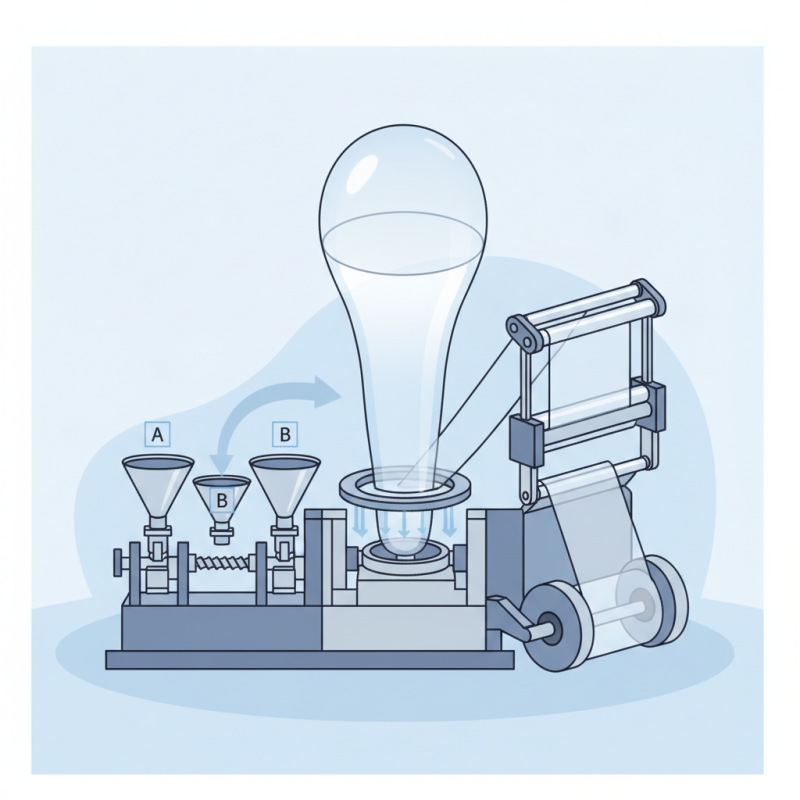
Using an aba blown film machine involves several steps. First, raw plastic materials are fed into the extruder. The materials are then melted and shaped into a tube. This tube is expanded by air and cooled to form a film. Operators must carefully monitor the temperature and pressure during this process. Any deviation can lead to defects in the final product. This complexity invites reflection on the need for continuous improvement in machine operation and training.
Despite its benefits, challenges exist. Issues like film thickness and texture uniformity require attention. Operators should regularly assess their processes. It’s crucial to identify areas for enhancement. The ABA blown film machine, while efficient, demands precision and adaptability in its operation.
What is an ABA Blown Film Machine?
An ABA blown film machine is essential in the plastic film industry. It consists of three layers: A layer, B layer, and another A layer. Each of these layers has its unique properties. The outer layers provide durability, while the middle layer offers barrier features. This combination helps create films that are strong and versatile.
The machine operates by melting plastic pellets and forming a tube. The film is then expanded by blowing air into the tube. This process is fascinating yet complex. Variations in temperature and pressure can lead to defects. Adjustments are necessary to achieve optimal results. For example, too much air pressure can cause uneven thickness. This inconsistency must be monitored carefully.
The output of an ABA blown film machine serves many industries. Applications range from packaging food to creating agricultural films. The ability to customize film properties allows for greater flexibility. However, the dependence on precision can be daunting. Manufacturers must continually refine their techniques. Each production run brings new challenges and opportunities for improvement.
Usage of ABA Blown Film Machine Across Different Industries
Components of an ABA Blown Film Machine
An ABA blown film machine is essential in the plastic film manufacturing sector. It typically consists of three main components: extruders, blow-up rings, and cooling systems. The extruders are responsible for melting plastic pellets, transforming them into a smooth melt. Data from industry reports reveals that over 60% of film quality is influenced by the extrusion process. Small variations in temperature can lead to significant deviations in film thickness.
The blow-up ring plays a vital role in shaping the film. It inflates the melted plastic as it exits the die, creating a bubble. This component demands precision. According to recent studies, an improperly calibrated ring can produce films with inconsistent properties, affecting usability. Ensuring the right air flow is crucial in achieving uniform thickness. Many operators overlook this, resulting in costly production errors.
Cooling systems are equally important. They solidify the film as it exits the die, quickly transitioning the material from molten to solid. Effective cooling is critical for maintaining quality. Industry data suggests that a delayed cooling phase can lead to defects in up to 30% of the produced films. Mastering the nuances of these components is essential for optimizing production efficiency and quality output.
The Working Principle of ABA Blown Film Machines
ABA blown film machines are essential in the production of multilayer films. These machines utilize three extruders to create films with distinct properties from each layer. The outer layers often provide protection and durability, while the inner layer can offer specific functionalities, such as barrier properties or sealability.
The working principle involves the melting of polymer pellets, which are then forced through a die. The die produces a tube of molten film. As this tube ascends, it is inflated and cooled, increasing its diameter. The process requires precise temperature control; even slight deviations can affect film quality. According to industry data, approximately 40% of faults in film production can be attributed to temperature inconsistencies.
In practice, the complex interaction between speed and thickness must be managed. Operators often grapple with variations in material flow, leading to production challenges. This dynamic process demands constant observation and adjustments. A report from a leading packaging industry analysis highlights that up to 30% of production time can be lost in resolving these issues, indicating a need for ongoing improvement in operator training and technology.
Applications of ABA Blown Film Technology
ABA blown film technology is widely used in various industries due to its versatility. This technology is particularly effective for producing films with different properties. The films created can be tailored to specific applications. For instance, they can be made thicker for heavy-duty packaging or thinner for more lightweight uses.
One common application is in food packaging. The films made from this technology help keep food fresh. They can create barriers against moisture and gases. Another area is agricultural films, which help protect crops from harsh weather. The films can be designed to allow light penetration, promoting plant growth.
However, there are challenges. The processing time can be slow, which may affect production schedules. Also, achieving the desired balance between strength and flexibility often requires careful adjustments. These factors remind us that while the technology is advanced, there is always room for improvement.
What is an ABA Blown Film Machine and How Does It Work? - Applications of ABA Blown Film Technology
| Dimension | Value |
| Layer Structure | ABA (3 layers) |
| Material Used | Polyethylene (PE) |
| Film Thickness Range | 10 to 200 microns |
| Production Speed | 30 to 150 meters/minute |
| Applications | Packaging, Agriculture, Construction |
| Key Advantage | Enhanced barrier properties |
| Market Trends | Sustainable materials and recycling |
Benefits of Using ABA Blown Film Machines in Manufacturing
ABA blown film machines play a crucial role in manufacturing. These machines create multilayer film. This film is commonly used in packaging. The three-layer structure has advantages that single-layer films lack. The outer layers provide durability, while the middle layer offers barrier properties. This design enhances product preservation.
Using ABA blown film machines has several benefits. The film produced is lightweight yet strong. This reduces shipping costs and minimizes waste. Companies find that the films are versatile. They work well for food, medical supplies, and consumer goods. The efficiency of these machines can lead to significant time savings. However, operators must be trained properly. Any mistake in settings can affect film quality.
Another important point is the environmental impact. While ABA technology can reduce material usage, the recycling process still needs improvement. Some films may not be easily recyclable. This poses challenges for sustainability. Manufacturers are encouraged to reflect on their practices. Balancing efficiency with eco-friendliness remains a work in progress.